5 Effective DIY Weed Killer Recipes That Actually Work | Pet-Safe
Skip the chemicals. These homemade weed killers actually work — and they won’t poison your dog, your kids, or your soil (well, most of them).
Let’s be honest — nothing kills a peaceful Sunday morning faster than spotting a fresh crop of weeds that have basically staged a hostile takeover of your driveway.
I’ve been there. I grabbed a bottle of commercial herbicide, read the warning label, and thought: should I be wearing a hazmat suit right now? That’s when I went down the rabbit hole of homemade, non-toxic DIY weed killer alternatives — and honestly? I never went back.
In this guide, you’ll get 5 science-backed recipes for making your own natural weed killer at home, a step-by-step application guide, answers to the most common questions, and an honest comparison with store-bought organic brands. Whether you’re treating a weed-choked driveway or trying to spot-treat without killing your lawn, there’s a recipe here for you.
Quick Reference
Table of Contents
At-a-Glance: Which Recipe Is Right for You?
| Method | Best For | Pet Safe? | Kills Grass? |
|---|---|---|---|
| Vinegar & Salt | Driveways / Cracks | Yes* | Yes |
| Boiling Water | Individual weeds | Yes | Yes |
| Corn Gluten Meal | Pre-emergent / Lawns | Yes | No |
| Rubbing Alcohol Spray | Lawn spot-treatment | Yes (dry) | Minimal |
| Horticultural Vinegar | Tough perennial weeds | Use Caution | Yes |
* “Pet Safe” means safe once dry. Keep pets away from treated areas until fully dry. Salt can harm paws — see notes in Recipe 1.
Why Make Your Own Weed Killer? (The Real Reason)
Here’s the uncomfortable truth most garden centers don’t put on a poster: glyphosate, the active ingredient in many best-selling commercial herbicides, has been classified as a “probable human carcinogen” by the International Agency for Research on Cancer. Multiple studies link long-term exposure to an increased risk of non-Hodgkin’s lymphoma. I’m not saying panic — but knowing that is enough for me to reach for my spray bottle and white vinegar instead.
Beyond the health angle, DIY weed killers are genuinely cheaper. A gallon of distilled white vinegar costs about $3. A bottle of name-brand herbicide? Easily $15–$30. The math is pretty clear.
🧪
Expert Note — The Vinegar Distinction You Need to Know: Most recipes online call for plain white vinegar from the grocery store. That’s 5% acetic acid — fine for young, tender weeds. But if you’re battling mature, established weeds or perennials, you need horticultural vinegar at 20–30% acetic acid, which you can find at garden centers or online. It’s dramatically more effective, but it’s also a skin and eye irritant. Wear gloves. Seriously.
Recipe 1: The “Nuclear” Option — Vinegar, Salt & Soap
This is the most popular DIY weed killer recipe on the internet for a reason — it works fast and costs almost nothing. But there’s some science worth understanding before you mix up a batch.
🧴 The Classic 3-Ingredient Recipe
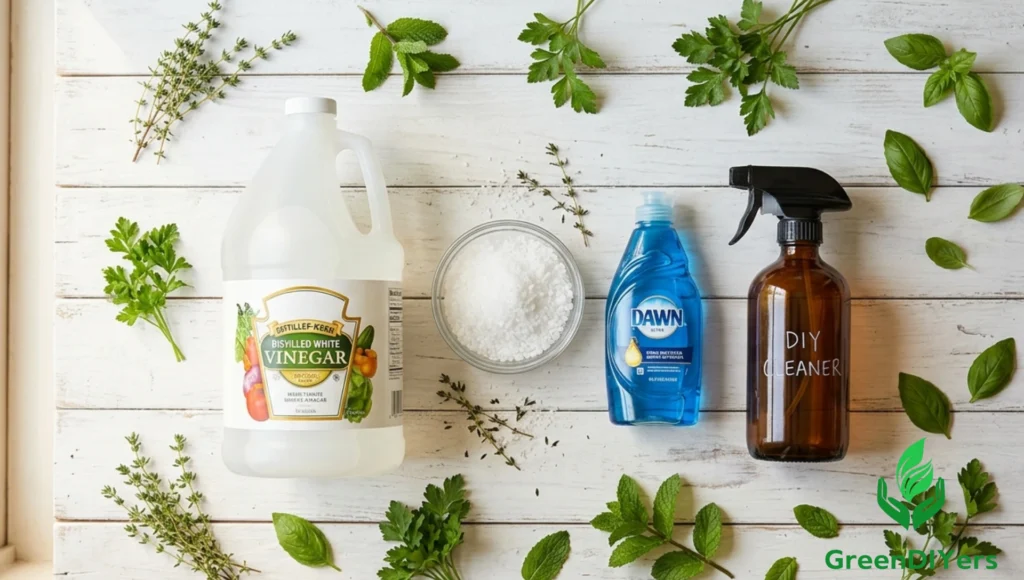
- 1 gallon white vinegar (5% acetic acid)
- 1 cup table salt or rock salt
- 1 tablespoon liquid dish soap (Dawn works great)
Instructions: Mix everything in a garden sprayer. Shake gently. Spray directly onto weed leaves on a sunny, wind-free day.
Why it works: The acetic acid in vinegar draws moisture out of plant cells through osmosis, essentially desiccating the weed from the outside in. The salt amplifies this dehydration effect. The dish soap is your surfactant — it breaks the surface tension of water so the solution actually sticks to waxy leaves instead of beading off.
⚠️ Critical Warning: Salt Sterilizes Soil
Salt doesn’t just kill weeds. In significant quantities, it renders soil inhospitable for years — nothing will grow there. Use this recipe on driveways, patios, gravel paths, and sidewalk cracks only. Never use it in garden beds, near tree roots, or anywhere you plan to grow something. This is the responsible advice most blogs skip.
Recipe 2: The “Lawn-Safe” Alternative
Here’s the gap that most weed killer guides miss: what do you do when the weeds are IN your lawn? The vinegar-salt combo will kill everything it touches, including your grass. So we need a smarter approach.
Option A — Spot Treatment with Rubbing Alcohol: Mix 2 tablespoons of isopropyl alcohol (70%) with 1 quart of water in a spray bottle. Apply directly to individual weeds. Alcohol disrupts the waxy coating on leaves, causing them to dry out — but the effect is more targeted and far less persistent in the soil than salt.
Option B — Corn Gluten Meal (The Pre-Emergent Hero): This is the smartest move for lawn owners who want to prevent weeds before they start. Corn gluten meal is a byproduct of corn milling that naturally inhibits seed germination. Spread it over your lawn in early spring before weed seeds have a chance to sprout.
🌿
Corn gluten meal is 100% pet-safe, adds nitrogen to your lawn (it’s literally a fertilizer too!), and won’t harm existing grass. Apply at roughly 20 lbs per 1,000 sq ft. The catch? It only prevents new weeds — it won’t kill existing ones.
Recipe 3: The “Instant Killer” — Boiling Water
You already have everything you need for this one. Zero cost. Zero chemicals. Absolutely devastating to weeds.
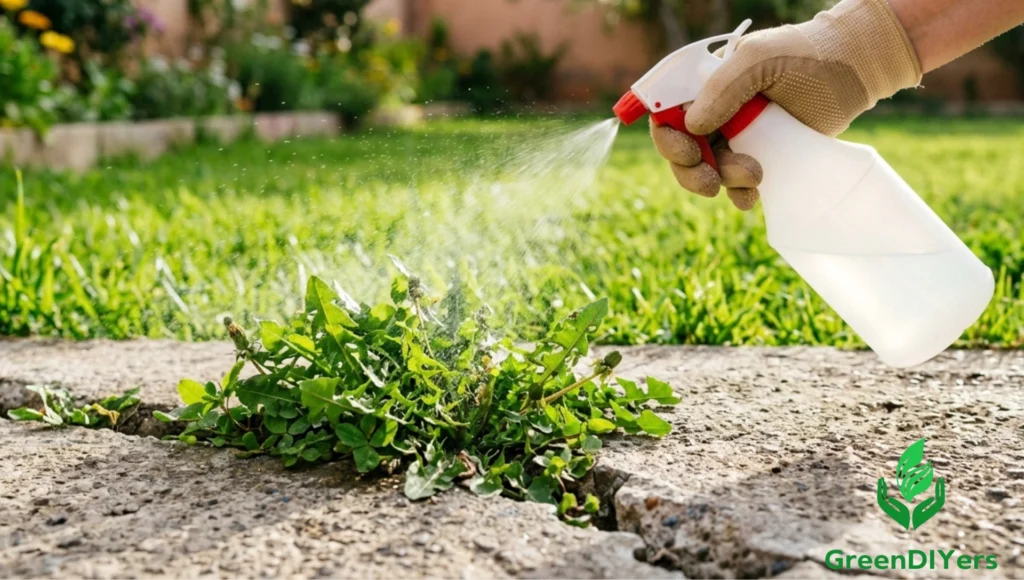
Simply boil a full kettle, take it outside, and pour slowly and deliberately onto each weed — especially targeting the base of the plant where it meets the soil. The scalding water denatures plant proteins and kills cells all the way down to the root zone on contact.
This works beautifully for weeds growing in sidewalk cracks, patio joints, and gravel. It’s slower for large patches, but for precision killing of individual plants, nothing is faster or cheaper.
One note: this method will kill anything it touches, including beneficial insects in the soil and surrounding plants, so aim carefully.
Recipes 4 & 5: Horticultural Vinegar & Essential Oil Spray
Recipe #4 — Horticultural Vinegar Spray: Swap out grocery store vinegar for 20–30% horticultural vinegar in the classic recipe above. Use it without salt for areas where you want to plant again in the future. The higher acidity kills tough perennial weeds down to the crown — though deeply rooted perennials may need a second application.
Recipe #5 — Clove Oil Spray: Mix 1 oz clove essential oil with 1 gallon of water and a dash of dish soap. Clove oil contains eugenol, a naturally occurring compound that research from Iowa State University has found to be an effective contact herbicide. It’s pricey but completely non-toxic and smells amazing. Great for use around raised beds.
Step-by-Step Application Guide
- Pick your moment. Spray on a warm, sunny day with no wind forecast for at least 24 hours. Acetic acid works by evaporating into plant tissue — sun accelerates this dramatically. Rain within 24 hours washes everything away.
- Mix your solution. Combine ingredients in a clean garden sprayer. Label it clearly so no one accidentally uses it for something else.
- Protect what you love. Use cardboard or an old newspaper to shield nearby plants. Even overspray from vinegar can damage desirable plants on a hot day.
- Spray to wet, not to drip. Coat the leaves thoroughly but don’t flood the soil unnecessarily. For crack weeds, try to hit the crown at the base.
- Wait 24–48 hours. Most annual weeds will yellow and die within a day. Perennial weeds may need a second application after a week. Don’t judge too early.
- Pull the corpses. Once dead, remove the plant matter so it doesn’t become a breeding ground for new weed seeds.
Frequently Asked Questions
Does DIY weed killer kill the roots?
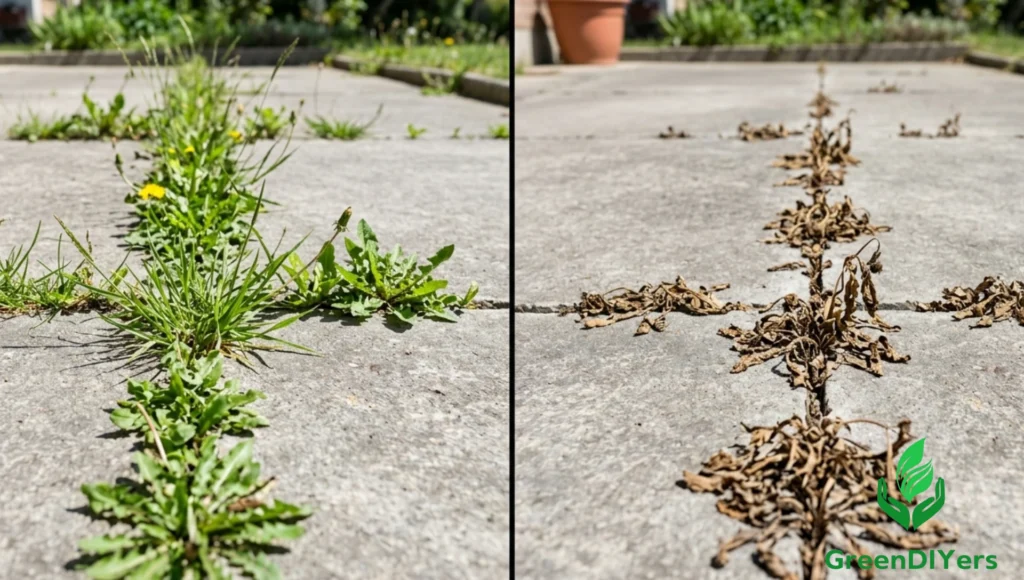
This is the most important thing to understand about homemade weed killers: vinegar-based solutions are contact killers. They destroy what they touch — the leaves and stems — but don’t travel down to the roots the way systemic herbicides do. For annual weeds (most of the common ones), this is fine because killing the top growth kills the plant. For perennial weeds like dandelions or bindweed, the root survives and the plant regrows. You’ll need repeat applications — or the horticultural vinegar option, which at high concentration can kill the crown.
Is Dawn dish soap safe for the environment?
Dawn (and most standard dish soaps) are biodegradable and break down quickly in soil. Used in small amounts as a surfactant, they don’t pose a meaningful environmental risk. That said, if you’re treating areas near a pond, stream, or storm drain, it’s worth switching to a certified eco-friendly dish soap just to be safe.
How long does it take for homemade weed killer to work?
On a hot, sunny day, you can see visible wilting within 2–4 hours and full browning within 24 hours for most annual weeds. Tougher, established weeds may take 48–72 hours and a second application. Boiling water is the fastest — it works on contact.
Will this kill my grass if I’m not careful?
Yes. The vinegar-salt recipe is not selective — it will kill anything it touches. For in-lawn use, stick to rubbing alcohol spot treatment, corn gluten meal, or old-fashioned hand-pulling. Your lawn will thank you.
DIY vs. Store-Bought Organic Brands
Is it ever worth buying a ready-made organic herbicide? Honestly — sometimes, yes. Here’s a quick comparison of the leading brands versus making your own DIY weed killer at home.
Sunday Herbicide
~$35 / qt
Iron-based OMRI-listed formula. Selective — won’t harm most grass. Great for lawn weeds. Expensive per application.
Captain Jack’s Deadweed Brew
~$18 / qt
Uses caprylic acid (from coconut oil). Fast-acting, non-selective. Safe for use around pets and kids once dry.
Green Gobbler Vinegar
~$20 / gal
Essentially horticultural vinegar in a nice bottle. You’re paying for convenience. The DIY version costs a third of the price.
DIY vs. Store-Bought
The verdict: For driveways and non-lawn areas, your homemade DIY weed killer will outperform most store-bought options on a cost-per-ounce basis — often dramatically. Where store-bought brands shine is in lawn-selective formulas (like Sunday) where you genuinely need something that won’t kill your grass. If you have a large, pristine lawn, Sunday’s iron-based herbicide is worth a look. For everything else? Mix your own.
The Bottom Line
Making your own DIY weed killer isn’t just a fun weekend project — it’s genuinely smarter gardening. You control what goes into it, what goes onto your soil, and what your pets and kids are potentially exposed to. The recipes above aren’t folk remedies; they’re backed by real chemistry that happens to involve things already in your kitchen.
Start with the vinegar-salt-soap combo for your driveway and sidewalk cracks. Try corn gluten meal on your lawn in early spring. Keep a kettle ready for that one stubborn weed in the patio crack. And if you’ve got deep-rooted perennials staging a rebellion, invest in a small bottle of horticultural vinegar.
Your garden — and your dog — will thank you. 🌿
© 2025 Green Garden Guide by BILAL A-LKHALDI · Privacy Policy · Contact
Information in this article is for educational purposes. Always test solutions in a small area first.