The Complete Guide to Scrap Metal Recycling
Introduction: There’s Gold in That Old Car
Let me ask you something — when was the last time you looked at a rusted appliance or an old car bumper and thought, that’s money?
Here’s the thing: scrap metal recycling is a multi-billion dollar global industry, and most people are leaving serious cash on the table without even knowing it. The U.S. scrap metal recycling sector alone generates over $117 billion in economic activity annually. That’s not chump change.
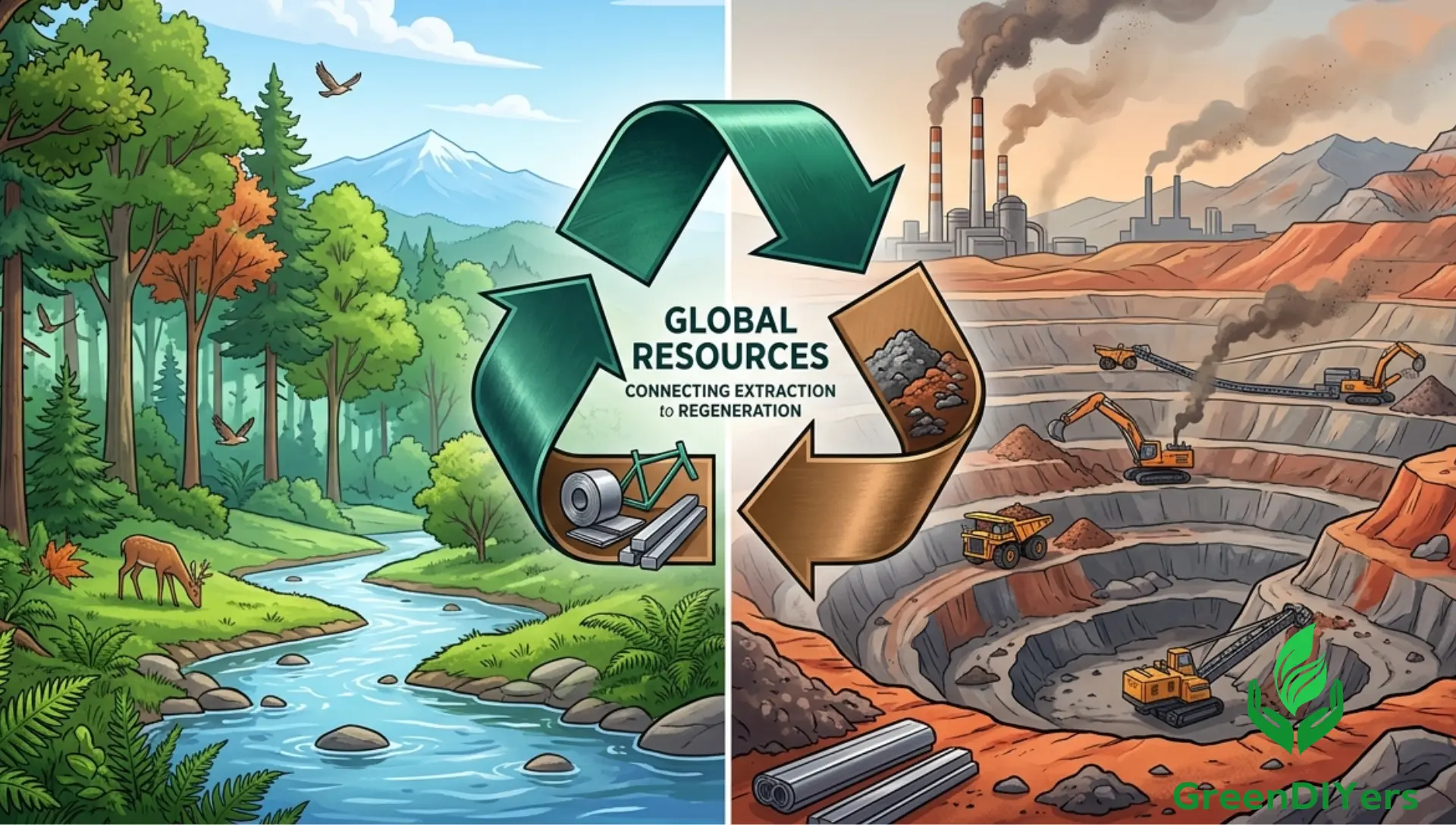
But it’s not just about profit. Metal is one of the most energy-intensive materials on the planet to produce from raw ore. When we recycle it instead, we slash carbon emissions, reduce mining damage, and keep our landfills from turning into metallic graveyards.
Whether you’re a homeowner with a pile of old pipes, a contractor clearing out a job site, or just someone who wants to understand where their aluminum cans actually end up — this guide is for you. We’re going to break down the entire metal recycling process, show you how prices are set, and share some pro tips to help you get the most value from your scrap.
Table of Contents
Ferrous vs. Non-Ferrous Metals: The Magnet Test That Changes Everything
Before you haul a single pound of metal to a scrap yard, you need to understand one fundamental distinction. It’s the difference between metals that will make you a little money and metals that will make you a lot of money.
The Magnet Test: Grab a fridge magnet. Press it against your mystery metal. If it sticks — you’ve got ferrous metal (iron or steel). If it slides right off — you’re holding something much more valuable.
Here’s a quick comparison to keep handy:
| Metal Type | Examples | Magnetic? | Relative Value | Common Sources |
|---|---|---|---|---|
| Ferrous | Steel, cast iron | ✅ Yes | Lower (bulk value) | Cars, appliances, construction |
| Non-Ferrous | Copper, aluminum, brass, lead | ❌ No | Higher (per-pound) | Wiring, plumbing, radiators |
| Specialty | Stainless steel, titanium | Weakly/No | Premium | Medical, industrial |
Non-ferrous metals like copper scrap recycling can earn you anywhere from $2.50 to $4+ per pound at a reputable yard, while steel might fetch just pennies per pound. Knowing your metals before you go is the single most valuable piece of advice in this entire guide.
Pro Tip: Stainless steel is often mistaken for regular steel. Test it with a magnet — if it barely reacts, you likely have stainless, which commands a better price than standard steel. Look for a “304” or “316” stamp to confirm.
The 8-Step Scrap Metal Recycling Process (The Full Journey)
See the interactive infographic above for a visual walkthrough of each step.
Most people assume recycling is simple: you drop it off, someone melts it down, done. The reality is a sophisticated, technology-driven supply chain. Here’s how it actually works.
Step 1 — Collection Scrap originates from two main streams: industrial/commercial sources (manufacturing off-cuts, demolished buildings, obsolete machinery) and consumer sources (old appliances, vehicles, household wiring). Industrial sources make up the vast majority of volume, but consumer scrap adds up fast.
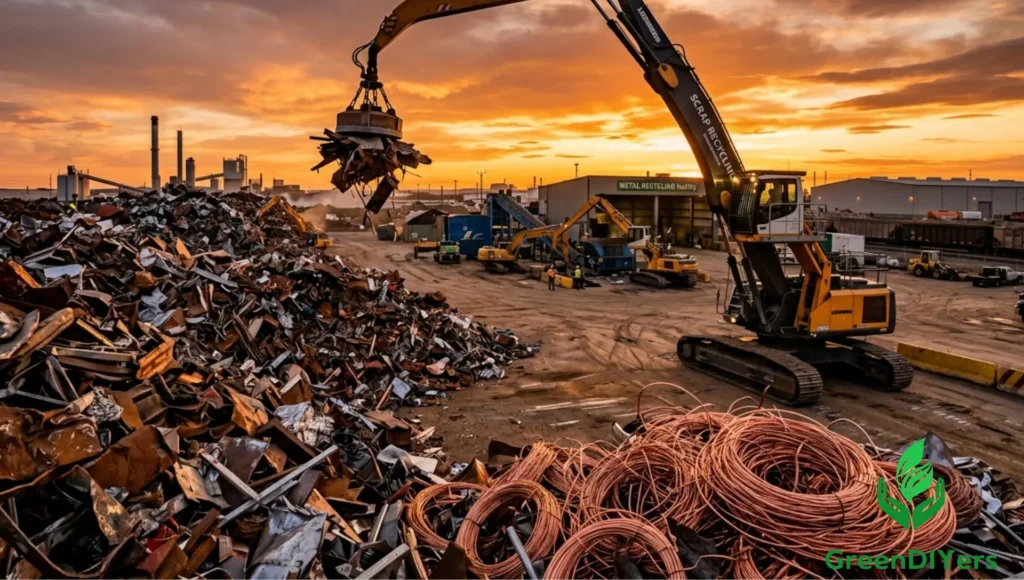
Step 2 — Sorting This is where the magic starts. Modern facilities use overhead electromagnetic cranes, eddy current separators, and infrared sensors to split ferrous from non-ferrous metals at high speed. Manual sorting also happens here — trained eyes catch things machines miss.
Step 3 — Shredding (Processing) Large shredders break down bulk material — an entire car, for example — into fist-sized chunks. This isn’t just for convenience. Smaller pieces have greater surface area, which makes subsequent separation and melting dramatically more efficient. A car can be fully shredded in under 45 seconds at a commercial facility.
Step 4 — Separation Shredded metal still contains contaminants: plastic, rubber, glass, foam. Eddy current separators use magnetic fields to literally fling non-ferrous metals away from the waste stream. Air classifiers blow lighter materials (like plastic film) away. The result? A much cleaner metal stream.
Step 5 — Melting Each metal type goes into its own furnace. Aluminum melts at around 1,220°F (660°C), while steel requires temperatures exceeding 2,700°F (1,480°C). Electric arc furnaces are the industry standard for steel — they’re more efficient and cleaner than older blast furnace technology.
Step 6 — Purification Melted metal isn’t necessarily pure metal. Electrolysis is used for high-grade copper — passing an electrical current through the molten material strips away impurities and deposits pure copper on a cathode. Other metals use chemical fluxing agents to pull contaminants to the surface as slag.
Step 7 — Solidifying The purified molten metal is poured into molds to create ingots, billets, or coils — depending on what the end buyer needs. These standardized forms are easy to transport, store, and feed into manufacturing equipment.
Step 8 — Quality Control & Transportation This is the step most competitors skip in their write-ups, but it’s critical. Before any recycled metal leaves the facility, it’s tested for tensile strength, chemical composition, and dimensional consistency. XRF (X-ray fluorescence) analyzers can identify a metal’s full elemental makeup in seconds. Only once it passes spec does it ship out to auto manufacturers, construction firms, or consumer goods producers.
The Economics of Scrap: How Prices Are Actually Determined
Here’s where it gets personal. You want to know what your pile of copper pipe is worth, right?
Scrap metal prices fluctuate daily, driven by three major forces:
- Global market demand — If Chinese steel mills are buying, prices go up everywhere. Construction booms in Asia have a direct effect on what your local yard pays.
- Metal purity — Mixed, contaminated, or painted metal is worth less. Clean, sorted metal commands a premium.
- Weight and volume — More is usually better, but larger yards can pay slightly higher rates.
Pro Tips for Maximum Profit
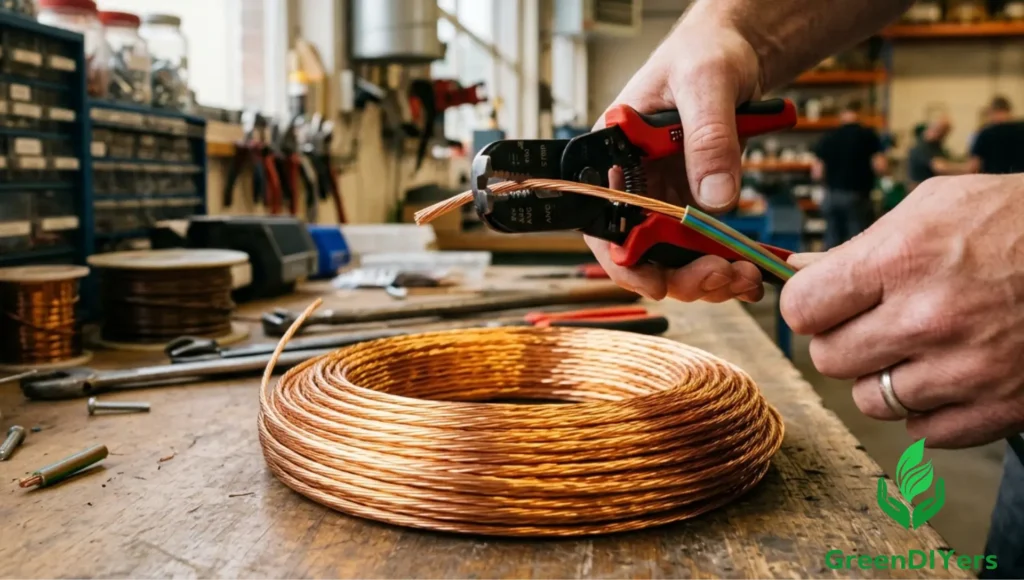
1. Clean your copper. Stripped, bare bright copper wire (called #1 copper) can fetch 20–40% more per pound than insulated wire. A wire stripper costs $20. The ROI is obvious.
2. Call ahead for pricing. Scrap prices change weekly. Ring two or three local yards before hauling. A 10-minute investment could mean 15% more in your pocket.
3. Separate before you go. Don’t mix copper with brass, or aluminum with stainless. Yards pay for the lowest-grade metal in a mixed load. Take 20 minutes to sort at home and you’ll avoid that penalty.
4. Know the “dirty dozen.” Copper with attached steel fittings, brass with zinc solder, and aluminum with steel bolts all get downgraded. Remove dissimilar metals before you arrive.
Environmental Benefits of Recycling Metal: The Numbers Don’t Lie
If profit doesn’t move you, maybe this will.
The environmental benefits of recycling metal are staggering, and they’re backed by hard science from the U.S. Environmental Protection Agency and the Bureau of International Recycling.
- Recycling aluminum saves approximately 95% of the energy required to produce it from raw bauxite ore. That’s not a rounding error — it’s a near-total elimination of energy demand.
- Recycling steel uses roughly 60–74% less energy than producing new steel from iron ore.
- The global recycling industry reduces CO₂ emissions by approximately 500 million tons per year — the equivalent of taking over 100 million cars off the road.
- Every ton of recycled steel saves 2,500 lbs of iron ore, 1,400 lbs of coal, and 120 lbs of limestone from being mined.
For businesses operating under ESG (Environmental, Social and Governance) frameworks, scrap metal recycling isn’t just a disposal option — it’s a documentable carbon reduction strategy. Many manufacturers now pay a premium for suppliers who use certified recycled feedstock.
Modern Technology: How AI and X-Ray Are Transforming Recycling
The recycling industry of 2025 looks nothing like it did a decade ago.
AI-driven robotic sorting systems from companies like AMP Robotics can identify and sort up to 80 items per minute — roughly twice the speed of a human sorter, and with greater accuracy across dozens of material categories simultaneously.
XRF (X-ray fluorescence) analyzers have become standard equipment at serious scrap yards. A handheld XRF gun can tell you the full elemental composition of a piece of metal in under 10 seconds. This means faster, fairer, and more precise pricing for sellers.
Sensor-based sorting using near-infrared (NIR) and laser-induced breakdown spectroscopy (LIBS) technology can identify metal grades that are visually identical — like separating 6061 aluminum alloy from 2024 alloy, which was previously nearly impossible without lab testing.
These technologies mean higher quality recycled metal, less waste, and — importantly — better prices for people who bring in clean, well-sorted scrap.
Frequently Asked Questions
What is the most profitable scrap metal to recycle? Copper consistently commands the highest prices, especially for bare bright copper wire and clean copper pipe. As of 2025, premium copper grades at well-run yards can fetch $3.50–$4.50+ per pound depending on your market. After copper, brass and aluminum are strong performers.
Can you recycle food cans? Yes — steel food cans and aluminum beverage cans are among the most commonly recycled items in the world. Aluminum cans are particularly valuable: the entire production cycle from can to store shelf takes as little as 60 days when using recycled aluminum.
Where can I find a scrap yard near me? Search “[your city] + scrap metal yard” or use the iScrap App, which lists current prices from yards across the U.S. Always call ahead to confirm what materials they accept and their current pricing.
Do I need to clean my metal before selling? You don’t have to, but you absolutely should if you want maximum value. Remove plastic attachments, separate different metal types, and strip insulation from wire. Clean metal = premium pricing, every time.
What is the difference between a scrap yard and a junkyard? A scrap yard (or recycling facility) accepts metal for recycling and pays by weight. A junkyard typically accepts whole vehicles or large items and may resell parts before scrapping. Many facilities operate as both.
Final Thoughts: The Case for Scrap Metal Recycling
Scrap metal recycling sits at a unique intersection — it’s one of those rare activities that simultaneously makes economic sense, environmental sense, and practical sense. You’re turning what was waste into raw material for the next generation of products, while pocketing money in the process.
The metal recycling process has evolved from brute-force collection into a precision-engineered industry powered by artificial intelligence, advanced sensors, and global commodity markets. And yet, the fundamentals remain beautifully simple: know your metals, keep them clean, and find a fair buyer.
Whether you’re scaling a commercial recycling operation or just cleaning out a garage full of old copper pipe, the principles in this guide will help you get more value from every pound. The planet — and your wallet — will thank you.
For up-to-date environmental statistics on metal recycling, see the U.S. EPA’s materials and waste management data and the Bureau of International Recycling.
Word count: ~1,850 words | Author: Bilal Al-Khaldi