How to Recycle Fluorescent Tubes: A Complete Safety & Disposal Guide
By Bilal Al-Khaldi · 8 min read · Recycling, Eco-Living
So you’ve got a dead fluorescent tube sitting in the corner of your garage, and you’re wondering: can I just toss this in the bin? I get it — it’s tempting. But here’s the thing: you really, really can’t. And I’m going to make this as painless as possible for you.
This guide will show you exactly how to recycle fluorescent tubes safely, where to drop them off near you, and what to do if one breaks. Let’s get into it.
Quick Answer — 3 Steps
- Do not throw fluro tubes in your regular trash — they contain mercury.
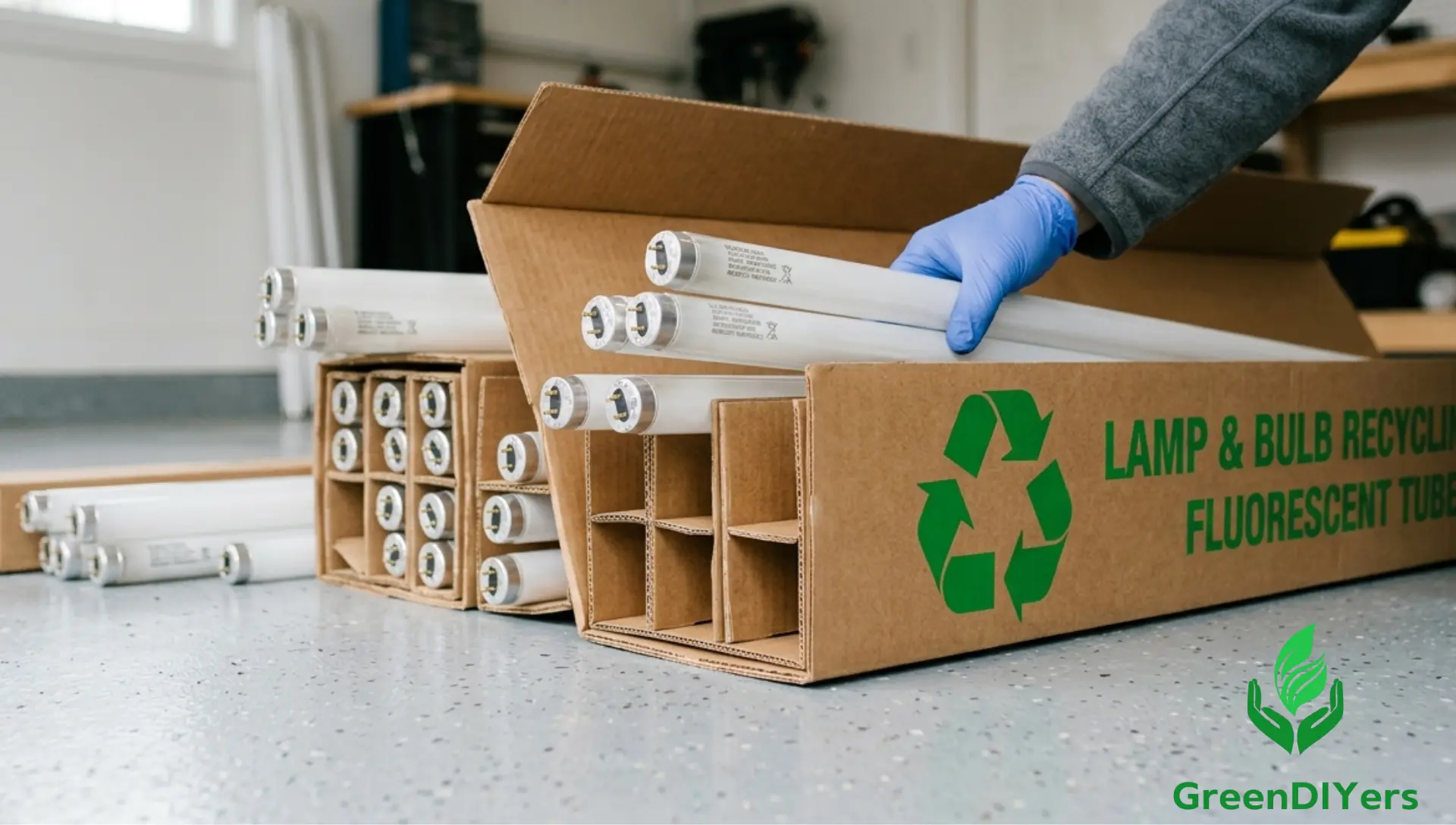
- Wrap them in the original packaging or a layer of bubble wrap to prevent breakage.
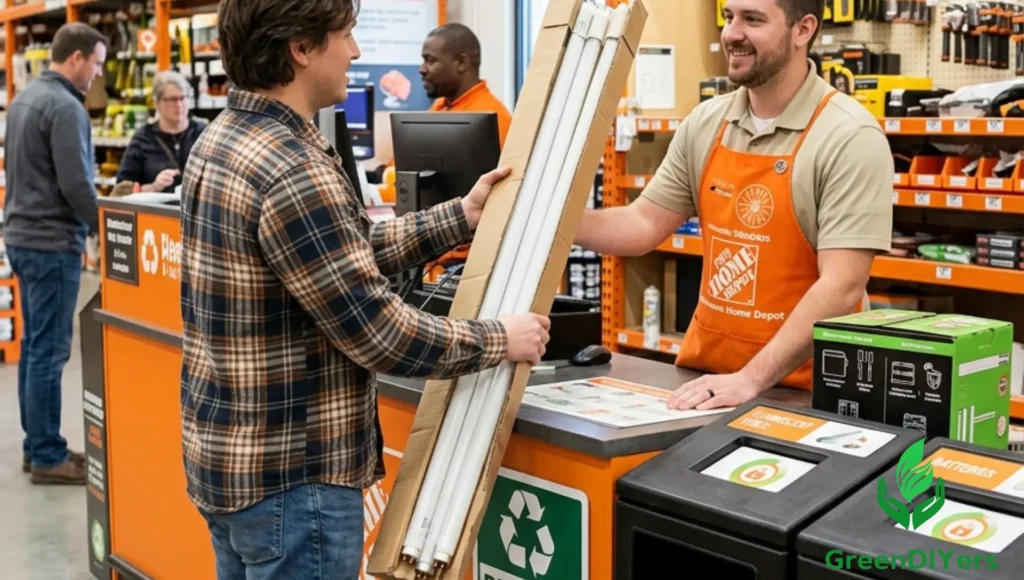
- Take them to a major hardware retailer (Home Depot or Lowe’s) or a municipal Household Hazardous Waste (HHW) facility near you.
Why You Can’t Throw “Fluro” Tubes in the Trash
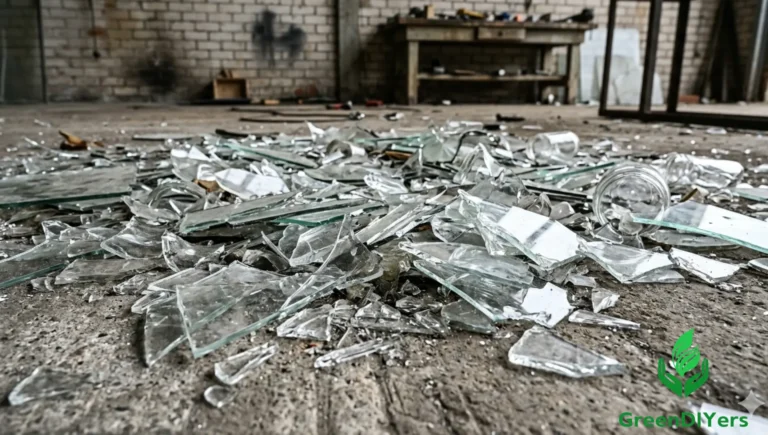
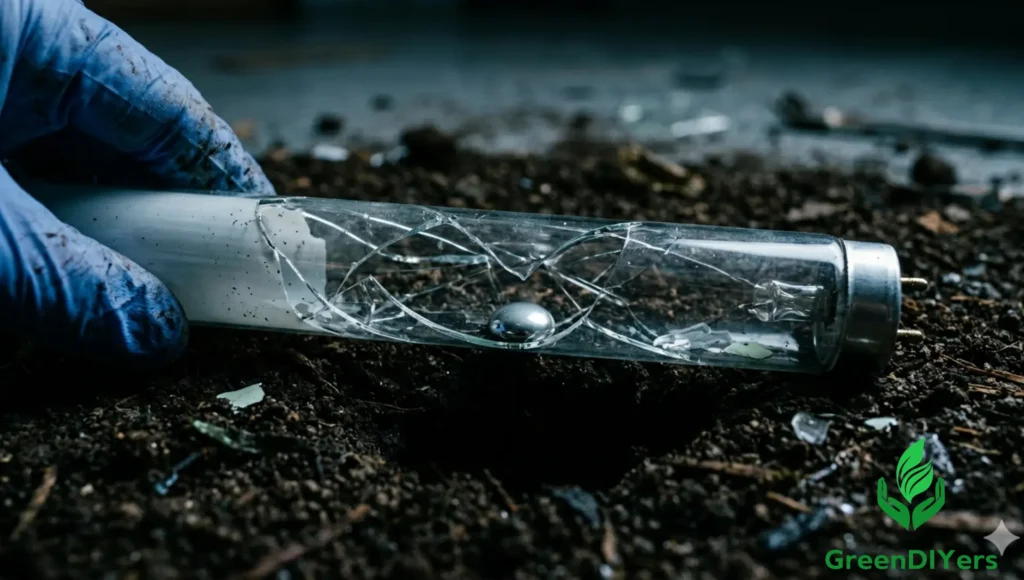
Here’s the short, unsexy truth: fluorescent tubes contain mercury — a toxic heavy metal. Each standard 4-foot tube holds between 3 and 5 milligrams of it. That might not sound like much, but when these tubes end up in a landfill, they crack. And when they crack, mercury vapour escapes into the soil, the air, and eventually the water table.
Think about it — if millions of households dump these into general waste every year, that’s a serious environmental problem. Mercury accumulates in fish, wildlife, and ultimately in us.
Important: Fluorescent tubes — including CFLs and 4-foot T8/T12 tubes — are legally classified as Hazardous Household Waste (HHW) in most states and countries. Disposing of them in regular bins may actually violate local environmental regulations.
This isn’t fearmongering. It’s just chemistry. And fortunately, recycling these things is way easier than you think.
Where to Recycle Fluorescent Tubes Near You
Good news: you have several solid options, whether you’re a homeowner, a renter, or running a business.
Option 1: Major Retailers
This is the easiest route for most people. Several big-box stores run drop-off programs for mercury bulb recycling:
- Home Depot — Accepts CFL bulbs and, in many locations, linear fluorescent tubes. Check your local store’s specific policy before you go.
- Lowe’s — Similar program to Home Depot. Most locations accept CFLs; tube acceptance varies by location.
- IKEA — Has in-store recycling for CFLs and some fluorescent lighting products.
Pro tip: Call ahead. Policies change, and the last thing you want is to drive 20 minutes only to be turned away.
Option 2: Local HHW Facilities
Your city or county almost certainly runs a Household Hazardous Waste (HHW) drop-off program. These are purpose-built for exactly this kind of thing — old paint, batteries, motor oil, and yes, fluorescent tube disposal.
👉 Find your local disposal centre via the EPA’s official state-by-state resource map: epa.gov/recycle/fluorescent-light-bulbs
Option 3: Mail-Back Programs
If you’re in a remote area or managing commercial quantities of tubes, mail-back recycling services are a lifesaver. Companies like EZ on the Earth send you a prepaid kit — you pack the tubes in, ship them back, and they handle the rest. Perfect for small businesses, offices, and schools.
How to Safely Transport Fluorescent Tubes
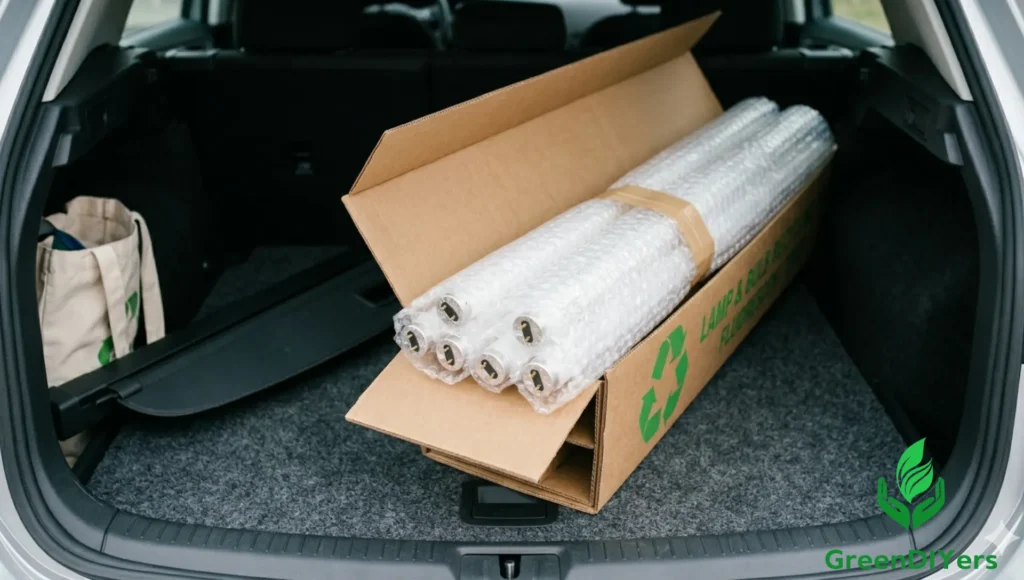
Getting your tubes to a drop-off point safely is half the battle. A broken tube in your car is not a fun situation. Here’s how to avoid it:
- Use the original cardboard packaging whenever possible — it’s designed for the job.
- If you’ve lost the packaging, wrap tubes individually in bubble wrap or newspaper, then place in a long cardboard box.
- Do not tape tubes together — when you peel the tape off, the friction can cause hairline cracks. It seems efficient but it’s asking for trouble.
- Lay the box flat in your boot (trunk), not standing upright where it can tip.
- Keep the space well-ventilated during transport, just in case.
What to Do if a Fluorescent Tube Breaks
Okay, this is the section where I need you to pay attention. Accidents happen. If a tube breaks in your home, here’s the correct way to handle it — because most people’s instinct (grabbing the vacuum) is actually the worst thing you can do.
⚠️ Do NOT use a vacuum cleaner on broken fluorescent tube debris. Vacuuming spreads mercury-containing powder throughout the air and potentially throughout your home via the exhaust.
Step 1 — Air out the room Open windows and doors immediately. Leave the room for 5–10 minutes to let the air circulate.
Step 2 — No vacuum — ever Set the vacuum aside. It will spread mercury powder through your air system.
Step 3 — Scoop the glass Use stiff cardboard or paper to carefully scoop large glass fragments. Never use your bare hands.
Step 4 — Pick up tiny fragments Use sticky tape (like duct tape) to dab up the fine powder and small glass pieces.
Step 5 — Seal and dispose Place all fragments in a sealed plastic bag. Take it to an HHW facility — do not bin it.
After cleanup, continue airing the room for several hours if possible. Wash your hands thoroughly. If anyone in the home has respiratory sensitivities, keep them out of that room for a while.
The Fluorescent Disposal Checklist
Before you head out, run through this quick checklist:
- ☐ I have not put fluro tubes in regular trash
- ☐ Tubes are wrapped in original packaging or bubble wrap
- ☐ I have NOT taped tubes together
- ☐ Box is laid flat (not upright) for transport
- ☐ I know my drop-off location (retailer or HHW site)
- ☐ Car is well-ventilated for the drive
Frequently Asked Questions
Does Home Depot recycle 4ft fluorescent tubes? In many locations, yes — Home Depot accepts 4-foot linear fluorescent tubes through their in-store recycling program. However, this varies by store. The safest bet is to call your local branch before making the trip, or check their recycling page online. They reliably accept CFLs nationwide.
Are fluorescent tubes considered hazardous waste? Yes. Due to their mercury content, fluorescent tubes — including CFLs and linear T8/T12 tubes — are classified as Hazardous Household Waste (HHW) under EPA guidelines. Disposing of them in regular rubbish may violate state or local environmental laws.
Is there a fee to recycle fluro bulbs? Most household drop-off options are free. Home Depot and Lowe’s programs are no-cost for consumers. Some municipal HHW facilities are also free for residents. Mail-back programs for businesses typically charge a small fee per kit, which covers packaging and certified recycling.
Can I recycle broken fluorescent tubes? Yes, but they need to be sealed in a plastic bag first. Many HHW facilities will still accept them. Do not take broken tubes to retail drop-off points — call your local HHW centre and ask for their guidance.
What’s the difference between CFL and fluorescent tube recycling? CFLs (compact fluorescent lamps — the curly-shaped bulbs) are accepted almost everywhere, including most retail chains. Linear fluorescent tubes (the long straight ones) require more specialist handling. Fewer retailers accept them, so an HHW facility is often your most reliable option for tubes.
Ready to make the switch for good? After you’ve recycled your old tubes, the logical next step is switching to LED tube replacements — they last up to 5× longer, use 50% less energy, and contain zero mercury. No recycling runs needed. A win on every level.
This article is written for informational purposes. Disposal regulations vary by location — always verify with your local municipality or the EPA’s official guidance at epa.gov. Written by Bilal Al-Khaldi.